Belogradchik Fortress: A Complete Self-Guided Guide to Bulgaria's Rock Citadel
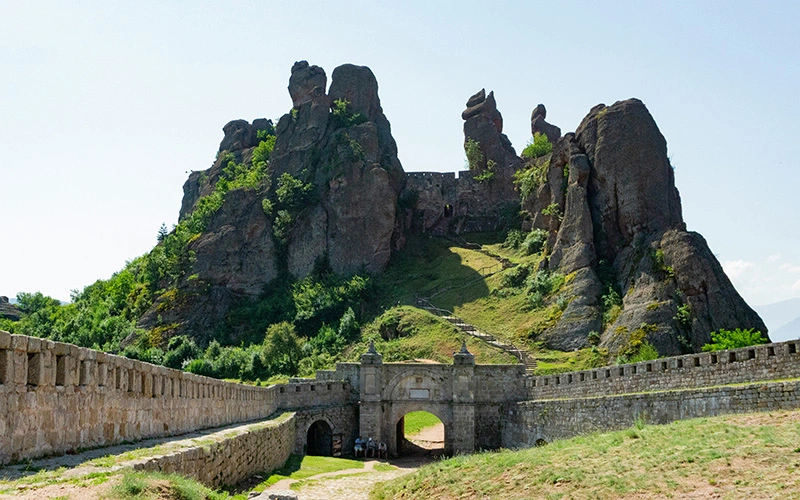
Belogradchik Fortress is the one Bulgarian monument that does not need a guide to explain it - the site does the work itself. Roman engineers picked this spot in the first centuries AD because nature had already built two thirds of the defences. Sandstone cliffs up to 70 m high form the northern and southern walls. Only the east and west gaps needed masonry. The result is a stronghold where you genuinely cannot tell where the rock ends and the wall begins.
The town sits about 170 km northwest of Sofia at 520 m altitude, close to the Serbian border. It is a three-hour drive, which puts it at the outer edge of a day trip and squarely in the sweet spot for an overnight. This guide covers how to do it independently and what most first-time visitors get wrong.
Why Belogradchik Fortress Rewards an Independent Visit
Coach tours give you 60 to 90 minutes here. That is enough to reach the second courtyard and take a photograph. It is not enough to climb to the top platform, walk the rock trails outside the walls, or see the light change on the sandstone.
Going alone gives you three things a group cannot:
- Light. The rocks are iron-rich sandstone and conglomerate. They turn deep red at sunrise and sunset. Day tours arrive at midday, the worst possible hour for both photography and heat.
- The upper level. Reaching the highest platform means metal ladders and narrow stone steps. Groups often skip it for time and safety reasons. It is the best view on the site.
- The surrounding rocks. The formations extend roughly 30 km along the ridge. Free public trails outside the fortress reach viewpoints that no tour includes.
What You Are Actually Looking At
The rocks
The Belogradchik Rocks formed over roughly 230 million years from layered sandstone and conglomerate, then were shaped by wind, frost and water. Iron oxides give them their red and ochre colour. Individual formations reach around 200 m in height.
Locals named the shapes centuries ago, and the names have stuck: the Madonna, the Horseman, the Schoolgirl, the Bear, the Monks, Adam and Eve. Each has a folk legend attached. The site was a finalist in the New7Wonders of Nature campaign, which is where much of its international recognition came from.
The fortress itself
Three building phases created what you see today:
- Roman (1st-3rd century AD) - the original fortification, guarding the road between the Danube and the interior.
- Medieval Bulgarian (14th century) - expanded under Tsar Ivan Sratsimir of Vidin as a regional stronghold.
- Ottoman (1805-1837) - the most visible layer. Rebuilt with French and Italian military engineers, adapted for cannon, with thick curtain walls and gun embrasures.
The site has three defensive courtyards, each higher than the last. The layout is why Belogradchik Fortress held out militarily long after similar sites fell - an attacker who breached one gate simply faced another climb.
Getting to Belogradchik Fortress From Sofia
By car - strongly recommended
Take the E79 north through Montana and Vidin direction, then follow signs to Belogradchik. Allow 3 hours each way, a little more in winter. The roads are decent but not motorway for the whole route, and the last stretch is a two-lane country road.
There is a paid car park directly at the fortress entrance. It charges a flat fee, not hourly. You can also leave the car in town and walk up in about 15 minutes.
By public transport
There is no direct train to Belogradchik. The nearest station is Gara Oreshets, about 13 km away, and you will need a taxi from there. Buses from Sofia run but are infrequent and slow. If you have no car, the honest advice is to hire one for two days rather than fight the timetable.
Practical Details That Save You Trouble
- Bring cash. Card terminals at the ticket office are not reliable. Bulgaria adopted the euro on 1 January 2026 and it has been the sole legal tender since 1 February 2026, so bring euro notes and coins.
- Ask for the audio guide. At the cash desk you can access an audio guide in Bulgarian, English and Romanian. Human guides are available but an English speaker is not guaranteed on the day.
- Check the combined ticket. A combined ticket covers the fortress plus the town's history museum, natural history museum and art gallery. If you plan to see more than one, it saves money.
- Opening hours shift by season. Summer typically runs from around 08:00 to 19:00, with a shorter winter window. Confirm before travelling if you are aiming for the last hour of light.
- Wear proper shoes. You will walk on bare rock, uneven stone steps and metal ladders. Trainers with grip are the minimum; sandals are a bad idea.
Pros and Cons of the Self-Guided Approach
Advantages
- You control the hours, which means you can be there for golden light instead of midday glare.
- Costs stay low: entrance is a single-figure sum per adult, parking is a flat fee, and fuel split between two people beats any tour price.
- You can add nearby sites at your own pace rather than following a fixed circuit.
Drawbacks
- The 3-hour drive each way makes a same-day return long and tiring.
- Interpretation on site is limited beyond the audio guide, so the layered history is easy to miss.
- Sections of the climb have steep ladders and limited railings. Families with small children should plan to stop at the second courtyard.
A Two-Day Itinerary That Works
Day one
- Leave Sofia by 09:00. Arrive around midday.
- Lunch in Belogradchik town, then check into a guesthouse.
- Visit the fortress from about 16:00. The crowds thin and the light improves through the afternoon.
- Stay until closing. Walk the free public viewpoints afterwards for sunset over the rocks.
Day two
- Early start for Venetsa Cave near Oreshets, roughly 20 minutes away. It is one of Bulgaria's larger show caves and is genuinely impressive.
- Alternatively, drive to Magura Cave, about 25 km north. Note that the famous prehistoric paintings are not shown to general visitors, so go for the cave chambers rather than the art.
- Return via Vidin and Baba Vida, Bulgaria's best-preserved medieval castle, on the Danube.
- Drive back to Sofia in the late afternoon.
If you only have one day
Leave Sofia at 06:00, be at the gates when they open, spend two and a half hours on site, add Venetsa Cave, and leave the region by 15:00. Skip Magura and Vidin entirely - trying to fit them in is what turns a good day into a stressful one.
Expert Tips
- Go in spring or autumn. May, June, September and early October give the best combination of light, temperature and low visitor numbers. July and August are hot and exposed - there is very little shade on the upper levels.
- Avoid rain days. Wet sandstone and metal ladders are a poor combination, and the upper platform may be closed in bad weather.
- Look for the astronomical observatory. Belogradchik hosts one of Bulgaria's research observatories. The low light pollution here makes it one of the better stargazing spots in the country, which is another argument for staying the night.
- Eat locally. This is Bulgaria's northwest - try banitsa, grilled meats and the regional wines from the Vidin area, which are far less commercialised than Thracian Valley labels.
- Book accommodation ahead in summer. The town is small and bed capacity is genuinely limited.
Belogradchik Fortress is the rare site where the geology outshines the architecture and the architecture still holds its own. Visiting independently costs less, takes longer, and gives you the two things that make the place memorable: the top platform and the evening light. Drive it over two days if you can, bring cash and proper shoes, and give Belogradchik Fortress the afternoon it deserves rather than the ninety minutes a coach schedule allows.