Veliko Turnovo: A Self-Guided Guide to Bulgaria's Medieval Capital
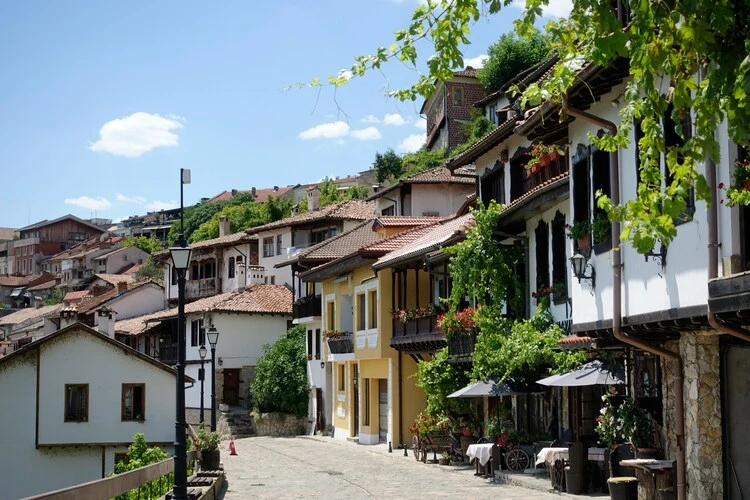
Veliko Turnovo is the one Bulgarian city where the history is not in a museum - it is the landscape. The medieval capital of the Second Bulgarian Empire is built across three steep hills wrapped by a hairpin bend in the Yantra river. Houses stack up the cliffs in tiers, so a balcony on one street sits level with a rooftop two streets below. This is a place you explore on foot, at your own pace, and it rewards independent travel more than almost anywhere else in the country.
The city sits about 220 km east of Sofia, roughly halfway to the Black Sea. It works as a long day trip, but it earns an overnight. This guide covers how to do it yourself and what most visitors miss.
Why Veliko Turnovo Works for Independent Travel
Group tours give this city two or three hours, almost all of it inside Tsarevets Fortress. That leaves out the old craftsmen's street, the riverside walks, and the reconstructed churches that make the place worth the drive.
Going alone gives you three clear advantages:
- The old town is compact. The historic core is walkable end to end in under an hour, so you do not need transport once you arrive.
- You set the timing. The fortress and the evening Sound and Light show run on different clocks. Only an independent visitor can catch both.
- The best parts are free. The craftsmen's street, the viewpoints and the river walks cost nothing, and tours skip them for time.
The History in Three Minutes
From 1185 to 1393, Veliko Turnovo was the capital of the Second Bulgarian Empire and one of the most important cities in southeastern Europe. Contemporaries called it the "Third Rome" after Rome and Constantinople. At its height the Tsarevets hill alone held a royal palace, a patriarchate, and hundreds of homes and churches.
In 1393 the city fell to the Ottomans after a three-month siege, and the empire ended. Much of what stands on Tsarevets today is careful 20th-century reconstruction on the original foundations, which is why the site reads clearly even though it was ruined for centuries.
One more fact matters for context: Bulgaria's first modern constitution was written here in 1879, after independence. The city has been the symbolic heart of Bulgarian statehood twice, six hundred years apart.
What to See in Veliko Turnovo
Tsarevets Fortress
This is the main event. The fortified hill held over 400 houses and around 18 churches at its peak. Allow at least 90 minutes to walk it properly.
Two things to prioritise inside:
- The Patriarchal Cathedral at the summit. The exterior is medieval in form; the interior was repainted in the 1980s in a bold, modern style that divides visitors. Climb the tower for the best panorama of the city.
- Execution Rock (Lobna Skala), the cliff where traitors were thrown into the Yantra. It sits at the northern tip with a sheer drop and a long view up the river.
The fortress generally opens 09:00 to 18:00 in summer and 09:00 to 17:00 in winter, though hours shift seasonally. The steps are broad and manageable, but it is a genuine hill climb - wear proper shoes.
The Sound and Light Show
After dark, the fortress becomes the backdrop for "Tsarevgrad Tarnov - Sound and Light," an audiovisual show using coloured floodlights, lasers, music and church bells to tell the story of the empire's rise and fall. It is genuinely impressive and it is the reason to stay into the evening.
The detail most people get wrong: the show does not run every night. It plays mainly on national holidays, for major events, and by advance booking for groups. Do not travel expecting a nightly performance. Check the official schedule before you fix your dates, and if it is not scheduled, book a group slot or plan around a date when it runs. Watching it unannounced is the single most common false expectation in the city.
The best free viewpoints are near the Asen Dynasty monument and from several hotel terraces in the old town.
Samovodska Charshiya - the craftsmen's street
This restored 19th-century market street is where working potters, weavers, cutlers and bakers still sell from original workshops. It is free to wander, it is where you buy real local craft rather than airport souvenirs, and tour groups rarely reach it. Go in the morning when the workshops are open.
Asenevtsi Monument and the river bends
The sword-raised monument to the Asen dynasty stands on a spur inside the Yantra's loop. It offers the classic postcard view of the houses cascading down the cliffs, and it is the prime free vantage point for the evening show.
Getting to Veliko Turnovo From Sofia
By car - the flexible choice
Take the Hemus motorway (A2) east, then follow signs to Veliko Turnovo. Allow about 3 hours for the 220 km. The route is mostly motorway and improving each year. Park in the new town and walk down into the old core; the historic streets are narrow, steep and hard to park in.
By bus
Frequent buses run from Sofia's Central Bus Station, taking roughly 3 to 3.5 hours. This is the reliable public option, with several departures a day. The bus station sits a short taxi ride from the old town.
By train
Trains are slower and less direct. Most involve a change at Gorna Oryahovitsa, about 10 km away, then a bus or taxi into the city. Scenic but not efficient - take the bus unless you specifically want the rail journey.
Pros and Cons of a Self-Guided Visit
Advantages
- Depth. You can combine the fortress, the craftsmen's street and the evening show, which no day tour fits into one visit.
- Cost. Fortress entry is a single-figure sum; the old town, viewpoints and river walks are free. A full independent day costs far less than an organised tour.
- Nearby add-ons. Arbanasi village and its painted churches are 10 minutes away and almost always skipped by tours.
Drawbacks
- The terrain is steep. This is a city of stairs and slopes. It is hard going for anyone with limited mobility.
- The Sound and Light schedule is unpredictable. Without checking ahead, you may arrive on a night it does not run.
- Interpretation is thin on site. The reconstructed fortress has limited signage, so the history is easy to miss without reading first.
Practical Tips From Experience
- Stay overnight. The old town at night, lit and quiet after the day-trippers leave, is the best version of the city. A cliffside guesthouse room over the Yantra is worth the modest cost.
- Bring cash. Bulgaria adopted the euro on 1 January 2026 and it has been the sole legal tender since 1 February 2026. Small workshops and the fortress ticket desk are safest paid in euro cash.
- Check the show schedule first. Fix your travel dates around the Sound and Light calendar, not the other way round.
- Wear real walking shoes. The cobbles and stairs are relentless, and the fortress climb is on uneven stone.
- Add Arbanasi. This nearby village has fortress-like stone houses and the Nativity Church, whose interior is covered floor to ceiling in 17th-century frescoes. It is one of the most underrated sights in Bulgaria.
- Eat with a view. Old-town restaurants built into the cliff serve Bulgarian classics over the river gorge. Book a terrace table for sunset.
- Go in spring or autumn. May, June, September and early October give comfortable temperatures. Summer afternoons on the exposed fortress hill are hot with little shade.
A Two-Day Itinerary That Works
Day one
- Arrive by early afternoon and check into an old-town guesthouse.
- Walk Samovodska Charshiya while the workshops are open.
- Spend the late afternoon inside Tsarevets Fortress as the light softens and the crowds thin.
- Dinner on a cliffside terrace, then the Sound and Light show if it is scheduled.
Day two
- Drive 10 minutes to Arbanasi for the Nativity Church and the old stone houses.
- Return for the riverside walks and the Asenevtsi monument viewpoint.
- Optional: the Forty Martyrs Church in the lower town, where the medieval kings were crowned and where a famous inscribed column records the empire's history.
- Drive back to Sofia in the late afternoon.
If you only have one day
Leave Sofia by 08:00, reach the city by 11:00, do the fortress and the craftsmen's street, eat over the river, and drive back. Skip Arbanasi and accept that you will miss the evening show unless it happens to run that night.
Veliko Turnovo is Bulgaria's most atmospheric city, and it is built for people who like to explore on their own two feet. The fortress is the headline, but the craftsmen's street, the river viewpoints and the evening show are what turn a good visit into a memorable one - and they are exactly what a rushed group stop leaves out. Check the Sound and Light schedule, stay the night if you can, and give Veliko Turnovo the full day and evening this remarkable medieval capital deserves.